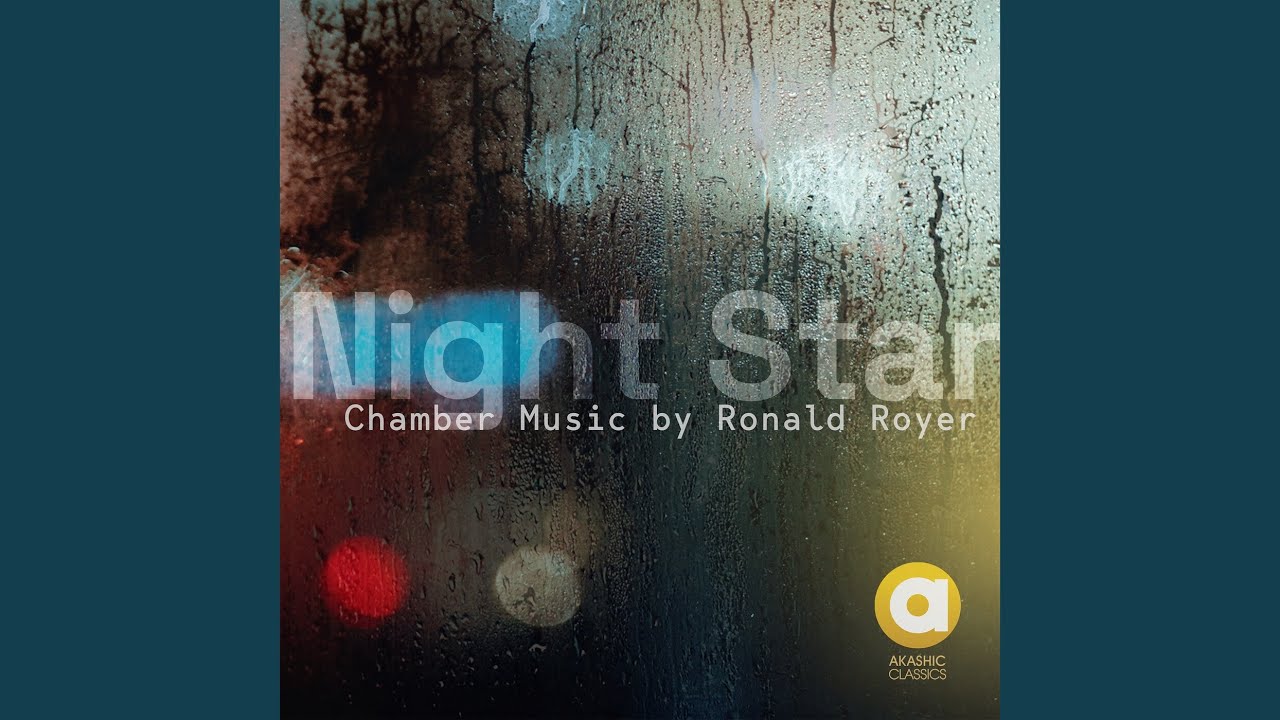
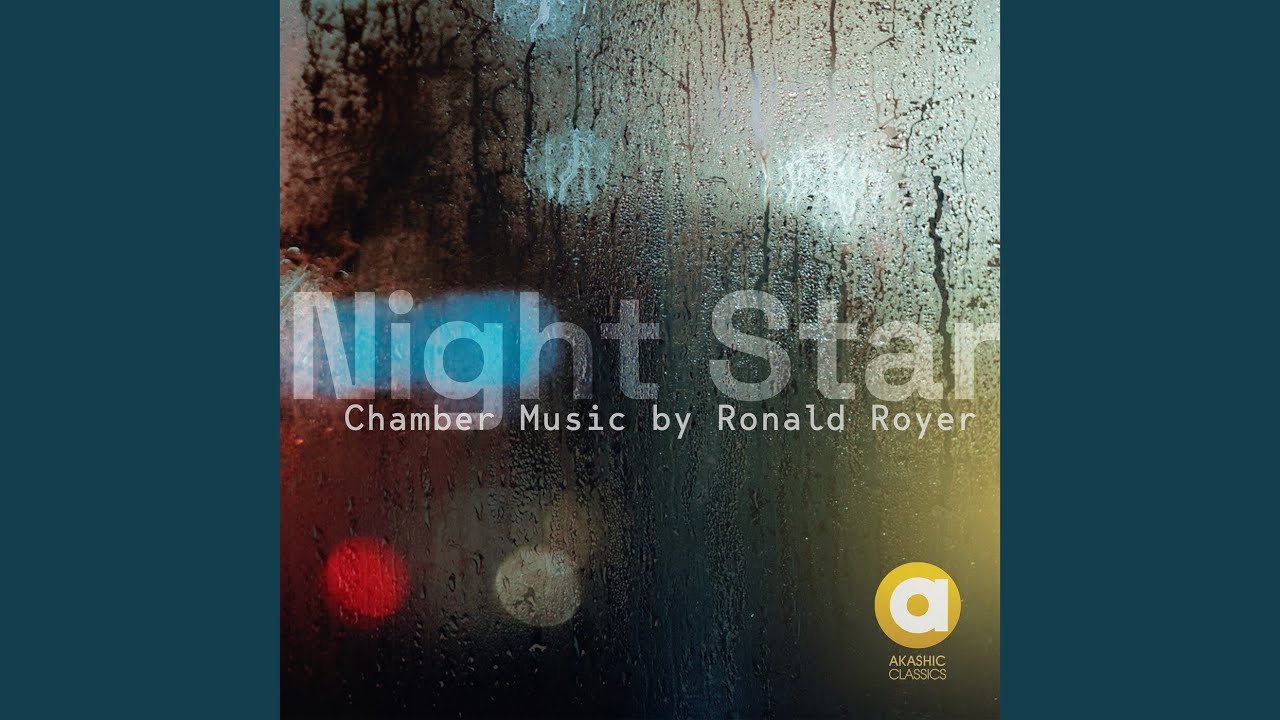
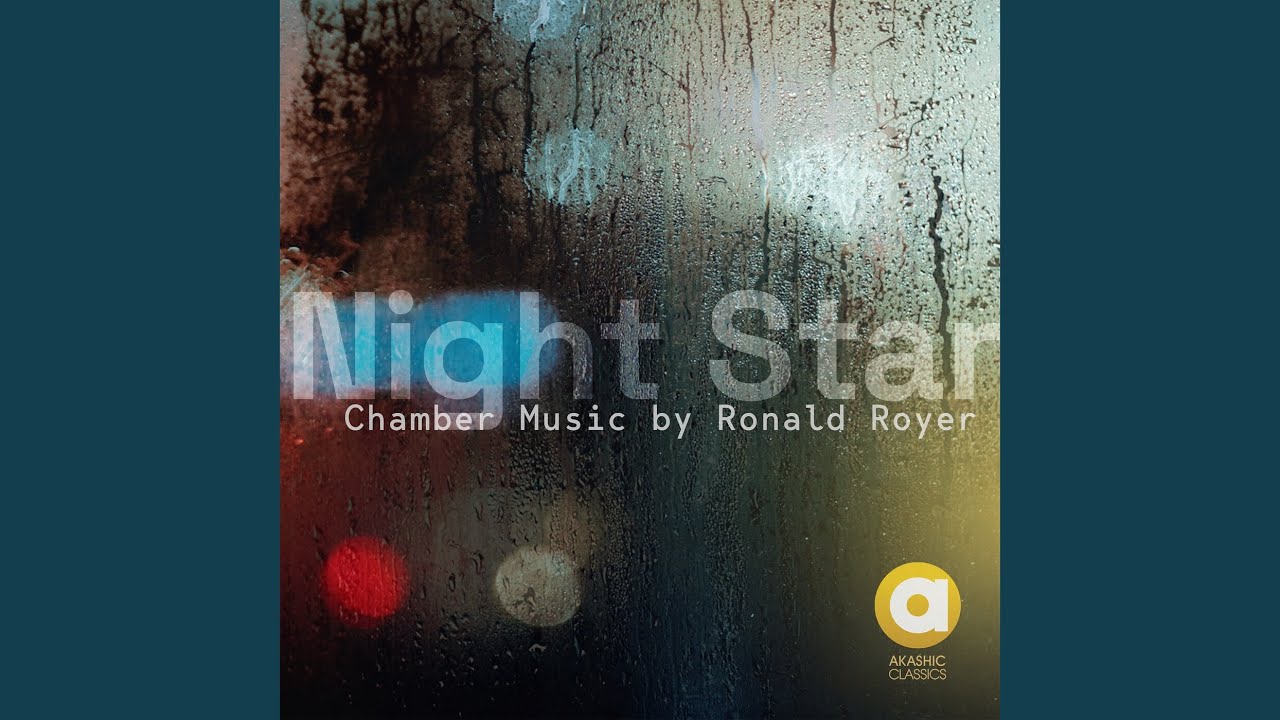
Night Star

Program Notes, by the Composer

To me, the night represents the place where fantasy, storytelling and mystery intersect. As such, it has repeatedly been a source of inspiration for my music over the years.

Mirage explores the dream state, Night Star represents a starry night, and the pieces of Night Music are inspired by night scenes. Musical Angels was inspired by several Italian Renaissance paintings with angels playing string instruments. Many of these paintings had dark backgrounds evoking the night. As for the other pieces on this album, I tried to invoke the spirit of the night.

I am thankful for all the superb musicians who gave such expressive performances and brought my music to life. I hope you will enjoy these nighttime journeys. (December 2022)

Tracks

  1. Danzón Overture Remix, for String Quartet and Percussion (6:06) – Odin Quartet, Alejandro Céspedes, Percussion
  2. Mirage, for Clarinet, Violin, Viola, Cello, and Piano (9:24) – Canadian Sinfonietta Chamber Players: Kaye Royer, Clarinet; Joyce Lai, Violin; Andras Weber, Cello; Talisa Blackman, Piano; with Guest Máté Szücs, Viola
  3. String Quartet No. 1: Mistico (4:14) – Odin Quartet
  4. String Quartet No. 1: Rondo Energico (7:19) – Odin Quartet
  5. Fantasia, for Piano Trio (10:22) – Aaron Schwebel, Violin, Leana Rutt, Cello, Alexander Panizza, Piano
  6. Night Music, for Piano: Echoes of Film Noir (6:13) – Alexander Panizza, Piano
  7. Night Music, for Piano: A Nostalgic Waltz (3:03) – Alexander Panizza, Piano
  8. Night Music, for Piano: Nocturne (4:38) – Alexander Panizza, Piano
  9. Night Music, for Piano: Bartok Meets the Blues (3:03) – Alexander Panizza, Piano
  10. Night Star, for Clarinet and Chamber Ensemble (8:27) – Canadian Sinfonietta Chamber Players: Tak-Ng Lai, Conductor; Kaye Royer, Clarinet; Erica Goodman, Harp; Lorne Grossman, Glockenspiel; Joyce Lai and Jin Lee Youn, Violins; Ian Clarke, Viola; Andras Weber, Cello; Tim FitzGerald, Bass
  11. Musical Angels, Variations on a Theme by Josquin des Prez, for String Quartet (8:54) – Odin Quartet

World Premiere Recordings (Tracks 1-2, 5-11)

Tracks 3 & 4 plus the original version of track 1, previously released on Journey Through Night – Akashic Classics, AE21009.

Odin Quartet – Alex Toskov and Tanya Charles Iveniuk, Violins; Veronica Lee (1, 3 & 4) and Matt Antal (11), Violas; and Samuel Bisson, Cello.

 Danzon Overture Remix, for String Quartet and Percussion (2022)

Having grown up in Los Angeles, I was exposed to and developed a love for Latin American music. Danzón Overture juxtaposes two contrasting musical styles and cultures, the French Overture and the Cuban Danzón. The French Overture was developed by Jean-Baptiste Lully in the 1650’s to introduce lavish theatrical productions for King Louis XIV of France. The Danzón is the official dance of Cuba, originated from European dances being combined with African rhythm and dance, and features engaging syncopated rhythms.

The Danzón Overture begins in a typical French Overture manner with a slow majestic section followed by a faster one in a fugal style. However, this faster section is in the unexpected style of a Danzón. In the middle of this dance section, the style shifts to include Afro-Cuban jazz rhythms. The more traditional Danzón music returns, again using a fugato, and builds in intensity before ending. My goal for Danzón Overture was to create a piece that is a little unexpected, includes some humour, and allows for some toe tapping.

This work was originally composed as the first movement for Dances with Percussion (Dedicated to Jean Norman Iadeluca), for Timpani, Drum Set and Orchestra (2018), then arranged for the Odin Quartet in 2019, and recorded by them in 2020. In 2022, I worked with percussionist Alejandro Céspedes to create a new version featuring traditional Cuban percussion instruments, such as the clave, guiro, timbales and congas.

Mirage, for Clarinet, Violin, Viola, Cello, and Piano (2019)

My intent in this composition is to explore the shifting and illusionary world of the dream state. Mirage begins with a slow meditative introduction representing the act of falling asleep. A solo viola cadenza follows, initiating a sequence of musical episodes, each emphasizing different emotions and parts of a dream. As the ensemble enters, the music takes on a melancholy air with occasional mysterious interludes. In the next section, the music accelerates and takes on a restless and more intense character employing a bluesy jazz-infused theme. The music moves into a more flowing and serene section before leading into an even faster and more agitated section representing the dream taking a more troubled direction. Leading to an unsettling climax, the music abruptly stops, leaving silence. The original meditative music returns as the world of dreams fades away and the dreamer is left wondering if their experience was real or imagined.

Mirage was originally composed for orchestra in 2007 and has been arranged for string orchestra (2007), chamber orchestra (2008), and then revised for quintet (2019).

String Quartet No. 1 (1994)

My String Quartet No. 1 has two movements, representing contrasting approaches to dealing with life’s challenges. The first movement, Mistico, symbolizes the value of approaching questions of modern living through contemplation. Urbanization, a loss of touch with the natural world, and the stress of modern life can be addressed through a return to the inner-self and a withdrawal from the fast-paced throng. From this vantage point, solutions can be found through contemplation and analysis. The music starts slowly and calmly, evolving smoothly and with the purpose of evoking a reflective thought process.

The second movement, Rondo Energico, shifts the intellectual grounding to swift action and direct engagement. Issues are to be confronted head-on, by actively working to tackle and resolve issues, challenges, and conflicts. The music is fast-paced, full of energy, and is constantly changing, to represent a multi-tiered approach to confronting issues.

 Fantasia, for Piano Trio (2007)

Fantasia was originally the second movement of my Sinfonia Concertante, for Piano Trio and Orchestra (2006). The starting point for composing this work was to acknowledge the anniversary of the births of two great composers, Mozart and Shostakovitch. I tried to play with the differences between the elegant and refined music of the 18th century Mozart and the more emotional and intense music of the 20th century Shostakovitch. As I developed my composition, I decided not to quote or imitate the music of Mozart and Shostakovitch, but to emphasize the idea of contrast. I used differences in musical elements, emotions, and styles to explore this idea. Ultimately, the music has a feeling of fantasy and mystery, with an air of ambiguity.    

The Fantasia starts with the pianist plucking and strumming inside the piano creating a mysterious and atmospheric mood. The music continues with the pianist playing back at the keyboard, joined by the violin and cello. The following neoromantic section features the cello and violin in an expressive melodic passage while the piano plays a more ornamental and supporting role. The music progresses to a playful scherzo section based on an Icelandic rhythm. When I started working on this music in 2006, I heard a lecture by the Icelandic composer, Tryggvi Baldvinsson and discovered that Icelandic folk melody commonly uses the complex rhythmic pattern of 4 + 3 + 4 + 2. I was intrigued and went home and composed the melody which ended up in the Fantasia. The movement ends with an atmospheric and dramatic cadenza for the three soloists ending with the cello imitating a seagull call.

In composing Fantasia, my good friend Chris Meyer, a composer and pianist, helped with writing the solo piano part. In 2007, I arranged the Fantasia for piano trio.

Night Music, for Piano (2021)

Night Music was created during the Covid-19 pandemic. Feeling nostalgic, I was drawn to night themes and music from the past. The composition is in the form of a piano sonata, but each of the four movements also functions as an independent character piece. Night Music was written for and dedicated to the wonderful Argentinian/Canadian pianist Alexander Panizza. Due to Toronto’s restrictions concerning live concerts, it was conceived to be premiered on the Scarborough Philharmonic Orchestra’s YouTube channel.

Echoes of Film Noir is inspired by the dramatic, gripping, and multi-layered music commonly found in this genre. Original Film Noir was commonly set in dark locations and shot in black and white. In creating music for my imagined nighttime crime drama, I used a traditional sonata allegro form for the structure. The movement starts with a first theme representing a hardboiled detective, followed by a second theme representing a “femme fatale”. The rest of the movement allows for the music (and the story) to develop, build to a climax, and conclude. I invite listeners to create their own stories.

A Nostalgic Waltz is inspired by music of the early 1900’s, especially Maurice Ravel’s Valse nobles et sentimentales. I imagined the music being played in a Parisian cabaret at night, during The Belle Époque. The movement starts with nostalgic, calm, and elegant music, builds to a faster and more agitated middle section, and then returns to the calm music of the beginning.

The nocturne is a form that is inspired by the night. My Nocturne represents a person climbing into bed, hoping to quickly fall asleep, but instead thinking of the day’s activities. After a struggle to doze off, sleep finally comes. The music is partially inspired by Frederic Chopin’s Nocturnes. In addition, there are three short sections using a whole-tone impressionistic scale, giving a questioning feel to the music, and providing a nod to Claude Debussy’s atmospheric Nocturnes.

Bartók Meets the Blues aims to mix musical styles derived from Central-Eastern European folk music and Afro-American music. First, I used musical elements from Béla Bartók’s Six Dances in Bulgarian Rhythm (and other pieces from his Mikrokosmos) and mixed them with major and minor Blues scales. I imagined this piece being debuted in a late-night jazz club, by a pianist who was unsure if this venue was the best place for this composition. The music begins in a playful manner and becomes more intense and virtuosic as it goes along. My goal was to create a slightly quirky and humorous showpiece for the piano.

 Night Star (2021)

My in-laws live in a beautiful small town, Cayuga, in rural Ontario. Night Star represents a night of stargazing in the countryside. The opening somber music represents an overcast sky. When the solo clarinet enters, the sky starts to clear, and the magic starts. When the ensemble returns, the sky has cleared, and the stars are sparkling. The opening somber music and clouds return. The final section, of two clarinet cadenzas contrasted by ensemble entrances, represent stars trying to peak through the clouds.

 Night Star was originally composed as the second movement of Echoes, a Concerto for Clarinet and Orchestra (2010). In 2021, the Canadian Sinfonietta asked if I had a work for solo clarinet and a chamber ensemble to be included on an album of Canadian music. They wanted to feature their principal clarinetist (my wife), Kaye Royer. I decided to rewrite my second movement, for an ensemble of clarinet, harp, glockenspiel, string quartet and bass. I made several changes to the composition, which added a minute of music. I also included a harp part, which was written to be played by the distinguished Canadian harpist, Erica Goodman.

 Musical Angels, Variations on a Theme by Josquin des Prez, for String Quartet (2022)

In 2018, my wife and I travelled to Italy, staying in Florence, Siena, and Milan. We visited several museums, where I was particularly taken by viewing musical angels in paintings, mostly from the Renaissance period. In 2022, I had the opportunity to compose Musical Angels, inspired by the Italian artwork I saw in 2018. I decided to find a Renaissance theme and compose a set of variations, thereby creating a connection between the past and present. 

For the theme, I chose the beginning of the Kyrie from Josquin des Prez’s Missa Hercules Dux Ferrariae. Josquin dedicated the mass to the Duke of Ferrara. The musical source material for the mass, the cantus firmus, is derived from the Duke’s name, in a technique first developed by Josquin for this work.

For Musical Angels, I used Josquin’s cantus firmus in each of the six variations of my composition. I used other musical elements from the Kyrie and incorporated various compositional techniques that Josquin used in his mass. 

For the introduction and before the last variation, I included a short excerpt from the beginning of Giovanni Pierluigi da Palestrina’s Stabat Mater, another beautiful Renaissance masterpiece. I also drew inspiration from the music of Ottorino Respighi, the 20th Century Italian composer who was influenced by early Italian music.

In the various paintings that inspired my variations, I could see different emotions on the faces of the angels. In trying to connect my music to these paintings, I chose a different mood for each of the six variations representing solemn, mystical, majestic, graceful, playful, and joyful emotions. I chose to use a string quartet for my composition, since various types of string instruments were found in the paintings I viewed.

Finally, Musical Angels is a 21st century attempt to recreate the beauty and elegance of a selection of Renaissance paintings and music. Musical Angels was written for and is dedicated to the Odin Quartet.

The Making of Night Star

The creation of this album largely came about in response to the Covid-19 pandemic. The project started when violist Máté Szücs came to Toronto to perform with the Scarborough Philharmonic Orchestra (SPO), the Canadian Sinfonietta (CS), and the Canadian Sinfonietta Chamber Players. Máté has had a career as an award-winning soloist, chamber musician and orchestral player, including serving as principal viola in the Berlin Philharmonic Orchestra from 2011 to 2018. Máté, along with four players from the Canadian Sinfonietta, performed and recorded Mirage, in a new quintet version I arranged for this occasion. This recording was supposed to be a track on a Canadian Sinfonietta album to be recorded in June 2020. In March 2020, the government of Ontario shut down many activities due to the outbreak of Covid-19. The June recording sessions were cancelled, putting the recording project into limbo.

When it became apparent that the pandemic would be a problem for live performances for the 2020-2021 concert season, the SPO decided to shift to online activities. We put out a call for proposals for musicians in our community to create videos for the SPO YouTube Channel and commercial audio recordings. The Odin Quartet and pianist Alexander Panizza were among the musicians who applied. The Odin Quartet, the SPO’s dynamic ensemble-in-residence, ended up recording their first solo commercial album, Journey Through Night (Akashic Classics) in the fall of 2020. This album features music by seven Canadian composers with videos of several of these compositions available on YouTube. My compositions, Danzón Overture and String Quartet No. 1 were included.

Also in 2020, Alexander Panizza began to record piano works by Maurice Ravel for the SPO. Alexander has toured worldwide as a soloist and has recorded Beethoven’s 32 Piano Sonatas, Alberto Ginastera’s complete piano compositions, and more. When Alexander asked if I would compose a piano work for him, I was thrilled, and the result was Night Music, which Alexander recorded in his home in the spring of 2021. I realized I was well on my way to having enough content to have a full album of my chamber music.

My next piece to be recorded was Fantasia, for Piano Trio, on May 4, 2022. The violinist is Aaron Schwebel, a former student of mine and now a good friend. He is Concertmaster with the National Ballet of Canada Orchestra and Associate Concertmaster with the Canadian Opera Company (COC). Aaron’s colleague in the Rosebud Quartet, cellist Leana Rutt is also the associate principal cellist of the COC and principal cellist of the Hamilton Philharmonic Orchestra. I was fortunate to have Alexander Panizza play the challenging piano part.

The Canadian Sinfonietta (CS) scheduled a recording session in January 2022 but had to cancel due to the pandemic worsening. Finally, on June 30, 2022, the CS was able to record two pieces, Night Star and Romance No. 2 by Tak-Ng Lai. Tak is the conductor and founder of the CS, and has conducted in Europe, North America and Asia. His daughter, Joyce Lai, is the CS artistic director and concertmaster, as well as a distinguished soloist and chamber musician. The CS is set to finish recording their album in 2023, but in the meantime, they have kindly given permission for Mirage and Night Star to be released on this album.

The last piece to be recorded was Musical Angels, scheduled for June 2022, but a member of the Odin Quartet came down with Covid-19 the day before the recording session. The recording was postponed to July 25, 2022. Also recorded on this day was percussionist Alejandro Céspedes, who played for a new version of Danzón Overture. Alejandro has performed with the National Opera and Ballet Orchestra of Cuba and the Niagara, Kingston and Toronto Symphony Orchestras. He was the perfect choice to create an authentic Cuban sound for the clave, guiro, conga and timbales parts he recorded.

There have been challenges along the way due to the pandemic, but I am thankful for all the exceptional musicians and recording engineers who were able to persevere with their art throughout and contribute to this album.

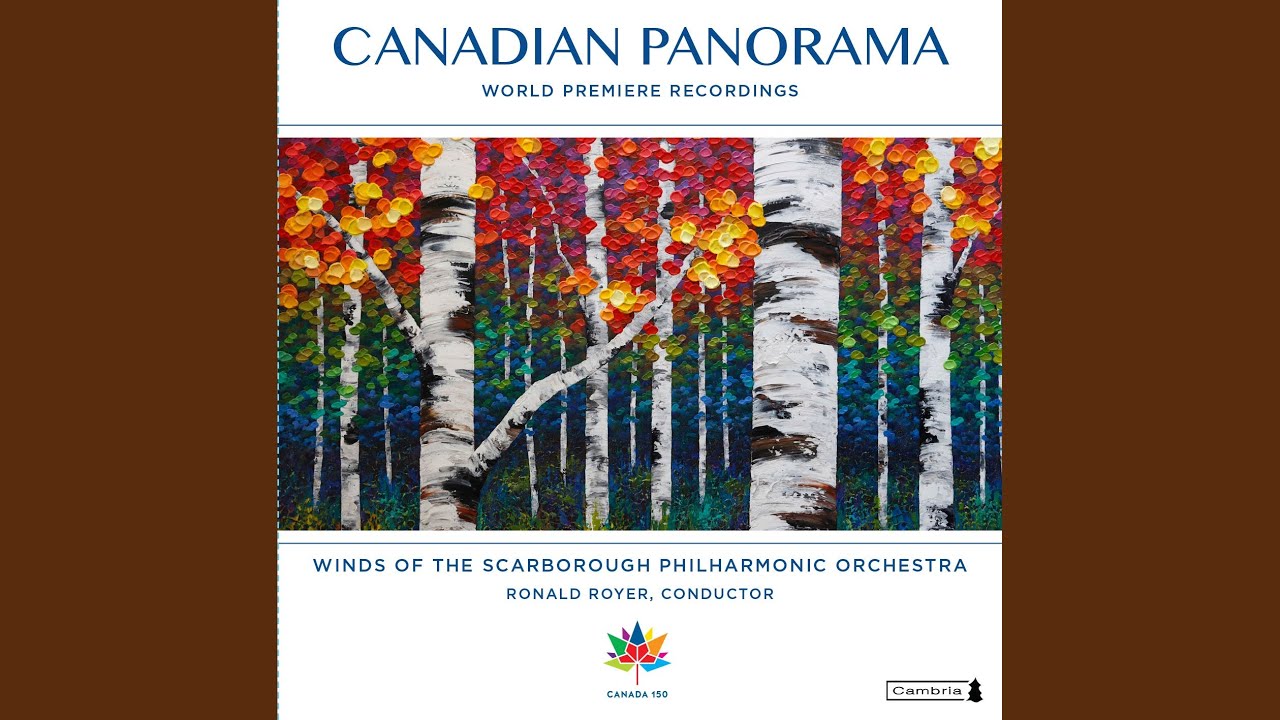
Canadian Panorama

Cambria Master Recordings
2017

In short, this recording and the music so beautifully performed on it are, and will continue to be for many years, a precious gift to us all in the year of our nation’s 150th birthday. –

The WholeNote, Allan Pulker, January 23, 2017

The Hollywood Flute of Louise DiTullio

Cambria Master Recordings
2009

Louise DiTullio-Flutes
Sinfonia Toronto, Ronald Royer-Conductor

“This CD was recently evaluated by me and I believe it is one of the best soloist performances of film music in recent years. Louise DiTullio’s flute playing is flawless and the choice of film music is outstanding, especially the suite from HOOK, arranged by Mark Watters. Also, the selections arranged by Ronald Royer make for very enjoyable listening. Because of its excellence I am designating this CD as Editor’s Choice, Best of the Month. It fully deserves any accolades it might receive. “

Roger Hall, Film Music Review, November 2010

This recording fulfills my own personal goals to revisit and record some of the solos I have played in films over my long career as well as concert music written for me by celebrated film composers. I have had long-standing professional relationships with all of the composers on this disc over several decades, having played on more than 1,200 movies, many of them scored by these composers. Le Papillon was written for me by David Rose in 1980 and I played its premiere in the same year. It has been my wish ever since to help secure a place for it in the flute repertoire with a recording.

Born in Los Angeles, the progeny of two wonderful, highly respected musical families,  I grew up as a musician with the support, encouragement and advice of my father, several uncles and cousins, all busy, working professionals.  My father, cellist, Joseph DiTullio, my sister, pianist Virginia DiTullio Royer, and I performed for many years as the DiTullio Trio. Living in Los Angeles, I have had the opportunity to pursue simultaneous careers in recording as well as all facets of classical music.

Words can never express my gratitude to John Williams, John Barry, Danny Elfman, Laurence Rosenthal, and posthumously, Jerry Goldsmith and David Rose, for the honor of playing in their orchestras for literally decades. Their music has filled me with joy and provides an outlet for music-making of an entirely different kind.  Although I love playing classical music, playing movie music of the quality that they produce completes a musical circle for me that I value beyond measure.  I thank them for allowing me to adapt and include their music in this presentation.  Thank you to David Rose Publishing for commissioning the reduced orchestration of Le Papillon to make this recording possible, and for permission to make this first recording of the work.  Thanks also to Larry Rosenthal for his permission to make the first recording of The Piper at the Gates of Dawn.  Special thanks to composer Mark Watters for his remarkable adaptation and orchestration of the music to Hook.  And finally, special recognition and thanks to my nephew, Ronald Royer, for composing Short Stories for this CD, arranging the movie music and Le Papillon, conducting the recording sessions, and taking care of a myriad of details as the project’s co-producer. It is largely due to his efforts that this CD was conceived and became a reality.

Finally, now that it is complete, there is the realization and satisfaction that there is more than an hours’ worth of new repertoire for the flute.  It is at once beautiful, challenging, fun, and musically rewarding.  I take great satisfaction in sharing this music as a legacy to future flutists.  May they enjoy playing it as much as I.

–Louise Di Tullio, August, 2009

Short Stories for Flutes, Harp, Percussion & String Orchestra

Siren’s Song, for Alto Flute (4:07)

Rather Blue, for Bass Flute (3:23)

The Chase, for Flute (2:55)

Child’s Play, for Piccolo (3:24)

Commissioned by Louise DiTullio for The Hollywood Flute CD Recording and Concerts, Short Stories was composed to showcase the varied tone colors and techniques of the alto flute, bass flute, flute and piccolo. During her career as a free-lance musician in the studios of Los Angeles, Louise has regularly been asked to play these four unique instruments. As well, Short Stories was designed to connect with the style and programmatic content of the film music theme of The Hollywood Flute project.

Siren’s Song for alto flute was inspired by the many great scores for Film Noir movies. The composer felt the hauntingly beautiful sound of the alto flute was a perfect fit for the classic femme fatale character of this genre.

Rather Blue for bass flute was inspired by blues and jazz; two musical idioms commonly found in film music. While the bass flute can be found in jazzy scores by composers like Henry Mancini, it is unusual to find the instrument playing quite so many notes as found in this challenging piece.

While the solo flute is usually not the featured instrument heard during dramatic chase scenes, The Chase was composed to demonstrate that the flute can play with the flair and virtuosity needed to create the tension required for effective ‘chase’ music. Imagine a scene featuring a chase on foot through the narrow streets of a crowded city.

Child’s Play for piccolo was inspired by the qualities of magical imagination and youthful enthusiasm commonly found in music associated with children in film. Louise specifically requested that the movement for piccolo feature the less commonly used melodic aspect of the piccolo as well as the typical virtuosic side of the instrument.

It was a true pleasure to be able to create this recording with my aunt, Louise DiTullio. I grew up hearing Louise, my pianist mother Virginia DiTullio Royer, and my cellist grandfather, Joseph DiTullio rehearsing and performing. These and other family members inspired me to become a musician. It was wonderful to be able to work with Louise, first as a cellist and later as a composer and conductor. This recording is a special part of that collaboration.

It was my honor and pleasure to be able to arrange and conduct the music of a group of great film composers. Finally, I appreciated co-producing this recording with my friend, Dr. Jeannie Pool, another person I have great respect for.

Ronald Royer

Audio Tracks on YouTube:

Romancing Chopin

Cambria Master Recordings, 2015

Valerie Tryon-Piano, Nora Shulman-Flute, Kaye Royer-Clarinet, Conraad Bloemendal-Cello

Toronto Sinfonietta, Matthew Jaskiewicz-Conductor


“Conductor Matthew Jaskiewicz conducts the Toronto Sinfonietta in Romancing Chopin, an ambitious album that brings together several exceptional soloists and a pair of Canadian composers in a tribute to Chopin’s continuing legacy. Ronald Royer, composer in residence with the ensemble, contributes three substantial works of his own as well as several arrangements of Chopin’s chamber works…quite a fascinating release.” –

WholeNote Magazine, Daniel Foley 


Ronald Royer – In Memoriam Fryderyk Chopin, for Clarinet, Cello and String Orchestra (7:41)

Kaye Royer-Clarinet, Conraad Bloemendal-Cello, Matthew Jaskiewicz-Conductor

In Memoriam Fryderyk Chopin is based upon and inspired by the Nocturne in E Minor, Op. 72, No. 1 for piano.  In Memoriam serves as a reflection on the life, work and death of Chopin at the age of thirty-nine.  After a short introduction, a meditative section features violin trills and a cadenza for clarinet followed by one for cello.  A more rhythmic and energetic section follows, which is meant to suggest his struggles in life and creativity.  After a climactic section for the string orchestra, a more peaceful section shines through representing the beauty, joy and genius of Chopin’s legacy.

Ronald Royer – Fantaisie-Impromptu, for Flute and String Orchestra (5:53)

Nora Shulman-Flute, Matthew Jaskiewicz-Conductor

The Fantaisie-Impromptu is a fantasy based upon the Impromptu No.3 in G flat Major, Op. 51 by Fryderyk Chopin, and strives to maintain the light-hearted spontaneity of the original.  Fantaisie Impromptu is in a Rondo form (ABACA), with an introduction and coda section.  The main melody (A section) makes use of the notes of Chopin’s main melody (with minor alterations), but changes Chopin’s rhythm and harmony to give the music a more 20th century feel.  The contrasting B Section is based upon a motive from the original Chopin melody while the C section is based on still another part of Chopin’s composition.  In the C section, the composer inserts one melody of his own, a Bartok-like folk melody.  The composition ends with an energetic coda, complete with a slight variation of Chopin’s own ending to his Impromptu.

Ronald Royer – Nocturne, for Clarinet and String Orchestra (7:54)

Kaye Royer-Clarinet, Matthew Jaskiewicz-Conductor

The Nocturne for clarinet and string orchestra is not based on an original Chopin composition, but is instead inspired by Chopin’s music aesthetic and works as a whole.  The introduction of the Nocturne, beginning on the note “E”, gradually thickens harmonically, using suspensions, while the clarinet introduces a motive that evolves into the first theme.  The second theme is started in the lower register of the clarinet and then developed.  At the end, a short clarinet cadenza brings back material from the first theme.

Tracks

1-5. Fryderyk Chopin: Five Mazurkas, 7, arr. for Chamber Orchestra by Alexander Rapaport (2:29, 4:39, 2:42, 1:33, 1:22)

6. Fryderyk Chopin: Largo from Sonata for Cello and Piano in G minor, Op. 65, arr. for Cello and String Orchestra by Ronald Royer (4:13)

7. Fryderyk Chopin: Nocturne in Eb major, Op. 9, No. 2, arr. for Cello and String Orchestra by Ronald Royer (5:07)

8. Fryderyk Chopin: Variations on a Theme by Rossini, arr. for Flute and String Orchestra by Ronald Royer and Alex Eddington (6:04)

9. Ronald Royer – In Memoriam Fryderyk Chopin (based on Nocturne in E minor, Op. 72, No. 1) for Clarinet, Cello and String Orchestra (7:41)

10. Ronald Royer – Fantaisie Impromptu (based on Impromptu in Gb major, Op. 51, No. 3) for Flute and String Orchestra (5:53)

11. Ronald Royer – Nocturne for Clarinet and String Orchestra (7:54)

12. Alexander Rapaport – Variations on a Theme of Chopin (based on Prelude in C minor, Op. 28, No. 20) for Piano and Chamber Orchestra (12:41)

13. Fryderyk Chopin – Grande Polonaise Brilliante in Eb major, Op. 22 for Piano and Orchestra (9:54)

Premieres: Conrad Chow, Violin

Cambria Master Recordings, 2012

Conrad Chow-Violin, Sinfonia Toronto, Ronald Royer-Conductor & Bruce Broughton-Piano

“Royer gives us a great vehicle and Chow plays his music with great finesse. I definitely want to hear more from this composer.” 

FANFARE, Maria Nockin

Introduction by Conrad Chow

The focus of this CD centers on the concept of the Premiere: the first showing of, or introduction to, something new. To that effect, I’m honoured to present each of the works on this CD for the first time on a recording. While new, each piece is inspired by earlier musical styles: Bruce Broughton’s Triptych evokes elements of the Baroque, 20th-century Prokofiev, and Celtic fiddle music of Scotland; his Gold Rush Songs are based on traditional American folksongs. Ronald Royers’s Rhapsody was inspired by rhapsodies of the mid-19th to early 20th centuries; the inspiration of his In Memoriam J.S. Bach needs no explanations. Kevin Lau’s Joy is inspired by turn-of-the-century Romanticism, as well as film music. Finally, I chose to include a favourite of mine, Chopin’s Nocturne in C# Minor, as an encore.

Ronald Royer – Rhapsody for Violin and Chamber Orchestra (12:43)

The Rhapsody draws inspiration from a variety of European sources, including French Impressionism, German Expressionism, Hungarian folk music, and virtuosic Spanish violin music. Combining all these disparate styles of music, ranging from Ravel and Bartok to Sarasate, allowed me to create a new work based on a traditional and popular form. Composing took place in three comfortable locations, my home in Toronto, my in-laws’ home in the rural Ontario town of Cayuga and my parents’ home in Los Angeles. This also helped in giving me the right ambience and variety of influences for this enjoyable endeavor. The Rhapsody was commissioned by the Orchestras Mississauga (John Barnum, music director) with the assistance of the Canada Council for the Arts.

Ronald Royer – In Memoriam J.S. Bach (Sarabande and Capriccio) for Violin Solo, Flute, Clarinet, Bassoon, String Quartet and Harpsichord (5:58 & 5:51)

In Memoriam J.S. Bach (2011) is a new arrangement of two movements from the Partita for Violin and Chamber Orchestra, composed in 2000 to honor the 250th anniversary of the death of J.S. Bach in 1750. In Memoriam takes its inspiration from Bach’s compositional mastery, as well as his ability to compose expressive and virtuosic music.

My Sarabande is based on the first two bars of the Sarabande from Bach’s Cello Suite No. 2 in D minor. The second part of this movement is more emotional in character and is based on the Allemande from Bach’s keyboard Partita No. 4 in D major.  I had to do some juggling with the rhythm, since Bach’s Allemande contained four beats per bar. One beat from each bar had to be removed to fit the three-beat form of the Sarabande.  The original melody is heard again at the end of the movement, overlaid by a florid counter-melody by the solo violin.

Capriccio, an Italian word-meaning whim or fancy, was used by Bach as a title of two of his compositions for keyboard. I chose this title to describe a work which combines a more contemporary style with Bach’s compositional techniques, as well as highlighting the humour of these works.

The Capriccio is a playful variation of a Bach Gigue, transformed into a classical era Rondo (ABACABA) form. The original A theme in G minor is written to imitate a Bach Gigue, although the rhythm is irregular, switching between five, six, or seven beats per bar. The B section begins with a darker and smoother version of the A theme, before leading into a series of Bach-like sequences. The C section enters in the new key of E minor and is derived from the first four bars of the A melody, but appears in retrograde (i.e. played backwards). This incarnation of the A theme assumes a Latin American character, as found in the music of Alberto Ginastera. When the A section returns, it is in the form of a Bach Fugato, although the rhythm is still irregular. The returning B and A sections are in an ornamented form, another Bach technique. There follows a short cadenza for the solo violinist, which leads into the final coda section with its homage to Bach’s cadential endings.

The Nightingale’s Rhapsody

Cambria Master Recordings
2007

Music for Clarinet and Strings, World Premiere Recordings

“Two compositions, Romance for Clarinet and Strings, and Rhapsody for Clarinet, Percussion and Strings, come from the pen of Ronald Royer. These masterful and witty pieces live up to Royer’s reputation for music that is both entertaining and imaginative.”

Showtimemagazine.ca,  Stanley Fefferman

Introduction

This collection of new compositions for clarinet and strings represents an idea that began at the turn of the Millennium in 2000.  At that time, I undertook to commission works which would be consonant with the uniquely expressive yet dynamic voice of the clarinet.

The four commissioned composers have each established a distinguished body of music which demonstrates their exceptional lyrical gifts, as well as their respect for music of established compositional techniques. Each of the composers responded to my wish to have a lyrical but dramatically rhapsodic work created especially for this recording project. Some of the commissioning criteria embrace the same traditions as many of the rhapsodic music of earlier masters such as Debussy, Brahms, Bliss, Liszt, Ginastera and Gershwin.

What has emerged has more than fulfilled my expectations, and we now have a new collection of truly brilliant works to add to the already-rich clarinet repertoire. It is my wish that performers and audiences enjoy these beautiful examples of the finest of today’s creative artists, and explore other music from their extensive output. – Jerome Summers

Composer’s Notes:

The Romance for Clarinet, String Orchestra, Piano and Harp was rewritten in the fall of 2004 for clarinetist Jerome Summers based on a previously composed orchestral piece called Cinema, which had been written the previous winter.  Cinema was commissioned for a special 40th anniversary concert to celebrate the foundation of the Hamilton Philharmonic Youth Orchestra and Dr. Glenn Mallory’s directorship. I had asked Glenn to describe his dream composition for this project.  After some thought, Glenn said he would love a piece featuring a beautiful romantic melody.

Today, one of the fields of musical composition that most highly values sweeping romantic melody is music for film.  Having worked in Los Angeles for the motion picture and television industry during the 1980’s, I decided to draw on this experience to compose Cinema.  Combining both American and European influences, Cinema and therefore Romance was written in two sections.  In this version called Romance, the opening section has a “Magical” atmosphere created by the strings, piano and harp against a more improvisatory and melodic clarinet part ending with a solo clarinet cadenza.  In the second section, the main romantic melody is first heard in the clarinet.  This section also includes a darker “film noir” melody featuring a solo violin and cello with the clarinet.  Romance ends as it began, quietly and calmly.

Romance was first performed by clarinetist Jerome Summers and the Toronto Sinfonietta conducted by Ronald Royer at the Royal Ontario Museum in Toronto on January 23, 2005.

The Rhapsody for Clarinet and String Orchestra was created to showcase various musical and technical features of a solo clarinet while being supported by a string orchestra and percussion.  I chose the form of a rhapsody because I felt it would give me the ability to show off the clarinet’s flexibility while also allowing me to have some fun composing a piece with a variety of musical styles and moods.

In the 19th-century, the rhapsody became a highly emotional and free musical form with large changes of moods connected to Hungarian or gypsy violin playing.  The height of this trend can be found in the 19 Hungarian Rhapsodies of Liszt (1846-85).  In the 20th-century, Bartok, Enescu and Ravel are some notable examples of European composers writing rhapsodies in this same trend.  As well, it is important to note that Debussy wrote the wonderful Premiere Rhapsodie for clarinet and piano for the Paris Conservatoire in 1910 to feature the player’s technical ability for its end-of -year wind instrument examinations.  In my Rhapsody, I have tried to pay tribute to this excellent collection of rhapsodies while also adding some other musical influences, including some rhapsodies by the Argentinean composer Alberto Ginastera.

In three continuous sections, the Rhapsody starts with a slow mysterious mood that introduces the main musical motives and melodies of the composition.  Next, the tempo increases while the music becomes more tender and flowing, ending with solo clarinet cadenzas.  The final section is a fast paced virtuoso rondo including Hungarian, Latin American and various other musical elements to complete the clarinetist’s musical workout.  The Rhapsody was commissioned and first performed by clarinetist Jerome Summers accompanied by conductor Stephane LaForest and Orchestra London (Ontario, Canada) on November 2, 2005.

Notes From the Recording Sessions 

I was very pleased when Jerry Summers asked me to join the sessions as a project liaison.  Having been a part of many recordings as both a professional cellist and a composer, I always enjoy the excitement of preserving a musical performance.  Arriving at the Ottawa church where the recordings sessions would take place, I was struck by the enthusiasm, passion and dedication of all the people working on this project.  There had been some last minute challenges to test the organizing team.  Jerry’s clarinet was accidentally damaged during the previous day’s rehearsal, so emergency repairs by the local clarinet expert were quickly arranged.  One of the viola players was forced by an emergency to withdraw from the recording sessions requiring a last minute substitution.  The piano player came down with a nasty flu but decided she would still try to play.  Then on the first day of recording, a very noisy hydro truck was deployed just outside the church, but the workers graciously responded to our plea for quiet! These were only a few of the situations in play leading up to and starting the sessions.

Simon Streatfield, the conductor and a veteran of many recordings, led the musicians with a cheerful demeanor and expertise that was an inspiration.  Keith Horner, the recording producer with years of experience at the CBC, kept the recording process on track giving directions and feedback with his rich and elegant voice.   A wonderful example of the players’ commitment to this project came from the principal percussionist, Andre Morin.  Before the sessions began, he realized the part scored for a low tom-tom in my Rhapsody presented recording challenges so he built a special drum just for this recording.  He didn’t ask for any additional money for all his work and he was right, this new drum did record beautifully.  All the players were amazing and illness didn’t stop the pianist from delivering an excellent performance.  Our clarinet soloist played all day with amazing musicality and verve, never showing signs of fatigue.

When the sessions were finished, the orchestra gave Jerry a round of enthusiastic applause, congratulating him for his outstanding playing and for organizing this very special Canadian project.  As a composer and a musician, I can’t tell you how much I enjoyed being a part of these sessions.

Jerome Summers-Clarinet, Thirteen Strings Chamber Orchestra, Simon Streatfeild- Conductor

1-2. Ronald Royer – Romance for Clarinet, String Orchestra, Piano and Harp (9:10)

3-6. Oliver Whitehead – Pissarro Landscapes for Clarinet, Piano and Strings (21:28)

7-10. Michael Conway Baker – Concerto for Clarinet, Piano, Percussion and Strings (16:21)

11-12. Dale Reubart – Arioso for Clarinet and String Orchestra (11:25)

13-14. Ronald Royer – Rhapsody for Clarinet, Percussion and String Orchestra (10:52)